o-AMERICAN-FLAG-facebook

Flag desecration: Is it legal?

flag desecration

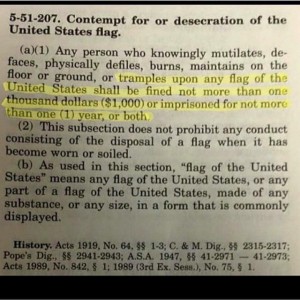
Arkansas statute 5-51-207

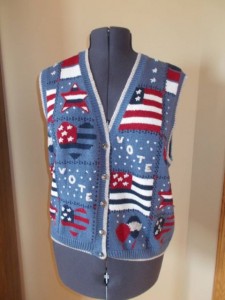
The skepdick saw this picture going around his Facebook feed this Memorial Day weekend and wondered about the veracity of flag desecration laws, including this one from Arkansas. Is it really illegal to defile, burn, place on the ground, or trample a flag of the United States? Wouldn’t this be the antithesis of the foundation of our Constitution? Or does this country have a law that protects people’s feelings and intangible symbols? Let’s dig into some legal statutes and see what the Supreme Court has to say about this issue and whether or not you can be arrested for wearing this sweater.

flag sweater

I vote that this is one ugly sweater

Continue reading

73,991 total views, 11 views today

Gun Control, what is it good for? Not much.

The skepdick recently had the opportunity to visit the Coroner’s office and witness a few autopsies. One of the unfortunate bodies being examined was a young man who had been shot and killed (yes, I do live in Chicago). This got me thinking about gun control. How did the person who shot this young man get their gun? Did they buy the gun themselves using their own FOID card? Did the shooter have a concealed carry license (CCL)? Basically, what were the chances that this shooting was perpetrated by someone using their own legally obtained gun and with a legal right to do so? If you’re like me, you probably assume the shooting was done with what we’ll call an illegal gun (i.e. the shooter did not have a CCL and was not the legal owner of the gun). Is this a fair assumption? Lets take a look at gun control in the United States and along the way we’ll find an answer to our question: what percentage of gun-related crimes are committed by people who legally possessed the gun?

Continue reading

7,097 total views, 1 views today

Controversies in Autism Spectrum Disorder

The skepdick got to write a paper in Psych class about controversies in autism. I suppose I could have been harsher on the anti-vax people, but so be it. Enjoy.

Autism Spectrum Disorder (ASD) is a range of neurodevelopmental disorders characterized by five separate diagnostic criteria. The most recent edition of the Diagnostic and Statistical Manual of Mental Disorders (DSM-5) lists those criteria as:

  1. Persistent deficits in social communication and social interaction.

  2. Repetitive patterns of behavior, interests, or activities.

  3. Symptoms must be present in early childhood.

  4. Symptoms must cause clinically significant social impairment.

  5. Symptoms are not better explained by intellectual disability or global developmental delay. (DSM-5., 2013, pp. 50-51)

As a spectrum, symptoms are further categorized into three levels of severity. With level 1 ASD the individual “requires support”, level 2 “requires substantial support”, and level 3 the individual requires “very substantial support” (DSM-5., 2013, p. 52).

Autism was first described in 1943 by child psychiatrist Leo Kanner, who identified an unusual pattern of symptoms in children, one of which was the child’s desire to be alone, thus naming the condition, autism, after the Greek work for self (Grandin, 2013, p. 5). Some of the criteria Kanner developed is similar to the DSM-5 criteria we use today, but it took quite a few years before we understood even the basics of autism and there were many controversies along the way.

Continue reading

8,379 total views, 2 views today

Psychoanalysis is a pseudoscience. (A quick review of Freud’s theory)

The skepdick is taking a class in psychology this summer and had some thoughts to share about this guy:

Sigmund Freud’s theory of psychoanalysis was derived in Victorian era Europe, a time of great sexual repression where even top minds had only superficial awareness of how biological processes control the brain and how brain functions control behavior and personality. Freud is known as the “father of modern psychiatry” (Biography, 1997, 0:05) and, like many other “fathers” or “mothers” of things, he had good intentions towards his patients and his field, but although his research led psychiatry in a new direction, it ultimately led Freud down a path where there was no escaping the facts that his theories were dead-ends based on false premises and his conclusions were based on observations rather than any legitimate evidence. Psychoanalysis is labeled a “science” many times in the video, as well as, by the Vienna press upon his escape to London from the Nazis in 1938, a “pornographic Jewish specialty” (Biography, 39:49). One wonders if the irony of this was not lost on Freud since he himself was worried 38 years prior that his new form of analysis would be “dismissed as a Jewish science” (Biography, 25:30). Today, few medical professionals would call psychoanalysis anything but a fringe pseudoscience.
To Freud’s credit, his attitudes towards mental illness were revolutionary and I’m impressed that he was savvy enough to dismiss the usual fringe cures of the time such as magnets, spas, and hydrotherapy as useless (Biography, 13:30). Isn’t it strange how these fringe cures are still around today? Sadly, during his 1895 trip to Paris, in an effort to learn more about how physical deformities or brain lesions may cause mental illness, he became convinced that “diseases are caused by ideas” (Biography, 11:25), certainly not how we define disease. Freud believed that all neuroses are formed as the ego (conscious mind) tries and fails to suppress urges coming from the id (unconscious mind); a fistfight if you will between different parts of our mind. Delineating the mind in such a way was a failure on his part, again, not really his fault since the biology wasn’t advanced enough for him to know better.
Freud’s observations were of a very narrow group of wealthy Jewish people, mostly women, biasing his research as much as did his culture. His theories on dream interpretation and free association have little scientific support and were not subjected to any experimental research at the time. He was also subject to a huge confirmation bias whereby he was able to find what he was looking for every time he had a session with a patient (it was always about sex, even if the patient thought otherwise). Why then do we celebrate this man who claimed to know much about sex and sexual desires, but who rarely had sex (he was convinced the “pull-out” method of birth control made men neurotic) (Biography, 17:08), who believed a baby’s primal sucking instinct was really all about sex (especially if it were a boy, then it was about sex with his mother), and who was unable to control his own desire to smoke 25 cigars a day despite his numerous bouts with cancer (and no, he didn’t really say, “a cigar is just a cigar”)?
The reason is because of his greatest contribution towards modern psychology, his“talking treatment” (Biography, 14:10). Freud likely found success with this type of therapy, not because people were learning about their supposedly repressed sexual urges or assigning meaning to random bits of data rumbling about in their heads in the form of dreams, rather because talking about your problems is simply the best form of therapy. It’s the talking that’s therapeutic and all the psychoanalysis that Freud believed he was doing in addition to talking was just a bunch of nonsense that actually got in the way of the true therapy. His falling out with his friend Carl Jung after which Freud “demanded absolute loyalty” to his ideas of psychoanalysis (Biography, 28:40) is evidence that he had fallen prey to the sunk cost fallacy at which time he was too far down the path to realize it was the wrong one.
Even though he was wrong about why people exhibit certain behavior, his methods raised awareness about mental illness in a time when mentally ill people were still being subjected to medieval levels of torture, so for that at least we should celebrate him.

Biography.com. (1997). Sigmund Freud. [Video File]. Retrieved Jun 18, 2014, from http://www.biography.com/people/sigmund-freud-9302400/videos/sigmund-freud-full-biography-9577539960

17,864 total views, 1 views today

Moral Landscape challenge to Sam Harris

The skepdick submitted this essay in response to Sam Harris’ challenge about his book, The Moral Landscape. The essay contest rules are here.


Challenge to The Moral Landscape by Sam Harris

Let me begin by dividing moral behavior into four separate categories, two of which are easily answered with science, and two which are not. This will illustrate how science provides us with correct answers about some, but not all moral questions.

Type 1: Delusion

Behavior prescribed by religious dogma or magical based belief; always derived from non-reality and often based on fear of imaginary constructs or intended to please said constructs. Examples include suicide bombing, forcing women to wear a burqa, refusing contraception, the actions of the Dobu, following commandments, etc.

Type 2: Harm

Behavior which physically harms another human or forces another to do something against their will. Examples include clitoral mutilation, the holocaust, racism, rape, murder, theft, etc.

Type 3: Community

Behavior construed as harmful to the community (decency or comfort level) rather than an individual. Examples include public nudity, free speech, drug use, privacy, etc.

Type 4: Ideological

Behavior resulting in no direct harm, but which requires a necessarily subjective measure of risk tolerance and usually operates on a large scale. Examples include nuclear power, genetic engineering, space programs, global warming, health care, opportunity costs of time, abortion, charity, etc.


Type 1 morals have an obvious answer and clearly fall within the purview of science, for a rational person knows that when a behavior is derived from non-reality that behavior must always be wrong. This is not to say these morals are wrong in substance, which must be judged on its own merit and placed in a different moral category, rather they are wrong because of their source. ‘Thou shalt not kill’ is correct moral behavior, because murder results in harm to another person (type 2) not because of the fear of going to an imaginary hell (type 1).

Type 2 morals are also easily measured by science since a rational person knows when physical harm is being done to another human and can therefore easily discern correct moral behavior (just don’t hurt other people).

My thesis is that type 3 and 4 morals don’t have obvious right answers for the simple reason that there isn’t one right answer to these types of subjective moral questions. If I force someone to wear a burqa because of what’s written in the Koran, I’m making a type 1 error because my action isn’t based on reality and a type 2 error because I’m forcing a woman to do something against her will. But since this woman must wear some clothing in public, who is to say how much? Pants? Shorts? A bikini? Nothing? There’s a sliding scale to this type 3 moral behavior and while science can certainly measure the amount of clothing she wears and facts can be said about its effect on society, this doesn’t mean there’s a true or best answer.

I worry about global warming and would prefer more nuclear power over coal. Is there one answer with which I’m comfortable as to how many and how far from my house nuclear plants are built? No, there are quite a few answers which would make me equally happy. A moral plateau, if you will, implying no moral truth, only a series of equally valid truths, how can science say which truth is better than another?

Mr. Harris writes that morality comes from a conscious mind and while I agree with him that minds are natural phenomena, I think his conclusion doesn’t logically follow that everything in nature has a right and wrong answer.

If we could in principle measure all the atoms in a human brain, there would be scientific truths to be said about that brain. We could correlate a specific brain state to this person’s reported increase or decrease in well-being, but note the word, “reported”. Just because we could measure unimaginably precise brain states, being able to rank type 3 and 4 moral behavior is still subjective.

Measurement and existence doesn’t imply any truth, it only means we’re able to measure a lot of variables. Having images of different brain states correlating to behavior still requires that we have some starting point. To say that one brain state equates to a higher spot on the ladder of well-being than another requires us to have a method of ranking either the behavior or the brain states. Based on what? Who decides what constitutes the higher spot on the ladder? Yes, worst possible misery is easy to judge, but that will rarely exist when discussing type 3 or 4 morals. Because I see the landscape as a plateau, I don’t see one right answer.

As an aside, thinking about the difference between answers in principle and answers in practice seems to be a waste of time. Technically, like the illusion of free will, since we are all made of atoms our choices are determined by those atoms, not by our conscious minds. If this is so, then I suppose our behavior is also determined by those atoms and can therefore be predicted, in principle. Technically, in principle, the laptop I’m writing on right now could at any moment transform itself into a hippopotamus. The odds are hugely against, but technically you have to admit that it’s a possibility. What is the point of saying something is technically possible or answerable in principle? This might be the topic of a separate discussion.

In conclusion, science easily shows us with type 1 and type 2 morals there are right and wrong answers and therefore moral truths that transcend cultures. This leaves us with the subjective type 3 and 4 morals, and even though there are real facts to be said about them, there can be no truth, only many different truths populating a moral plateau based on individual tastes, preferences, and risk tolerances. Just because real things exist in reality, doesn’t mean that there are correct answers to subjective questions.

-Jordan Brock

www.skepdick.org


30,998 total views, no views today

Hey baby, what’s your sign? I’ll bet it’s not what you think it is.

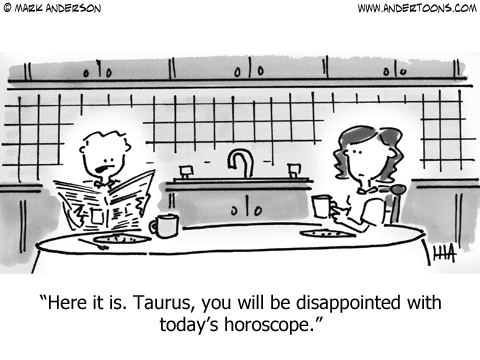
The skepdick spotted a tattoo on the back of a friend’s neck at Thanksgiving dinner last month and after a polite inquiry, she told me it was the symbol of her zodiac sign. In poor skeptical form I blurted out that everybody’s zodiac sign is wrong because the Earth has moved or something like that, but immediately qualified it by saying I wasn’t really sure and acknowledged I should probably do some research before telling people their tattoos were meaningless. Are they? Are the signs we think we’re born under not really the signs we’re born under (and for that matter, are tattoos of our signs really meaningless)? How would the zodiac move? And how did the zodiac originate? And more importantly, can the stars really have any influence on our lives? Grab your newspaper and check your horoscope, let’s see if there’s something to astrology or if it’s just the practice of ancient magic masquerading as science (okay, that may be a bit unfair, but I know how this article ends).

cartoon0913

Sometimes the horoscope is right

Continue reading

61,409 total views, 2 views today

“I don’t feel very much like Pooh today,” said Pooh. “There there,” said Piglet. “I’ll bring you tea and honey until you do.” ― A.A. Milne, Winnie-the-Pooh

The skepdick was watching Dr. Oz last week at the gym ( A - the treadmill only gets a few channels and B - sometimes you have to watch shows that mostly spout bullshit in order to identify and correct said bullshit) and what do you suppose he was pushing on the poor unsuspecting audience this time?

PoohBearHoney

If nothing else, hunny is delicious

You guessed it, a show all about poo. No, wait, it was about honey. Damn. Dr. Oz made five claims about the benefits of honey, all five of which I was skeptical as usual (no, I don’t think Dr. Oz works for Big Honey (although that does actually exist and probably paid for some of the studies we discuss below (okay, maybe not, I have no proof))). Let’s take these claims in order and see if he’s pushing his usual bullshit folk “wisdom” or if honey does indeed do what the good ol doctor says it can do.


Continue reading

45,125 total views, no views today